




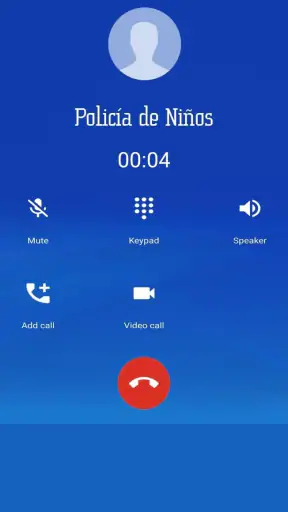
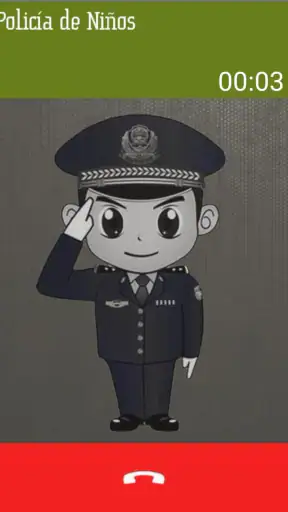
Parenting apps often promise a quick way to change difficult behavior, but the real test is what happens in the middle of an ordinary stressful day. Policía de niños - para padres takes a playful approach to that moment by presenting itself as a children’s police-themed tool for parents. I see it less as a serious discipline system and more as a conversation starter: something a parent can use when a child is ignoring a simple request and a little theatrical interruption may help reset the mood.
The app belongs to the parenting category and is free to use. It was developed by Kids police, carries an Everyone age rating, and works on devices running Android 5.0 or later. Its current version is 1.1.17. Those details make it accessible to many families with older phones, although suitability depends much more on a child’s temperament than on the device itself.
What interested me most is the handoff between the parent’s intention and the child’s reaction. The parent has to decide when the police idea is harmless fun and when it could feel frightening or humiliating. Used carefully, that distinction is the difference between a playful nudge and a poor discipline shortcut.
From a difficult moment to a practical routine
Starting with the situation, not the app
The best starting point is a small, clearly defined problem. Imagine a child refusing to put away toys before dinner. Repeating the same instruction may turn the request into a battle, while opening the app immediately can make the parent seem dependent on an outside authority. I would first give the child a calm, direct instruction, explain the consequence in ordinary language, and only then decide whether the app could add a playful change of pace.
That order matters because the application is not a replacement for a household rule. It works, if it works at all, by changing the emotional tone of a moment. The parent still supplies the rule, the reason, and the follow-through. Without those pieces, the police theme can become noise rather than guidance.
I also recommend considering the child’s personality before using it. Some children enjoy pretend play and may laugh at the idea of a children’s police officer getting involved. Others are sensitive to authority figures, uniforms, punishment language, or the suggestion that they are “bad.” For the second group, a direct conversation, a timer, or a shared routine is likely to be kinder and more effective.
Opening the tool and setting expectations
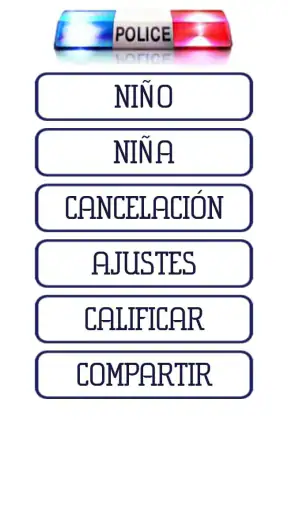
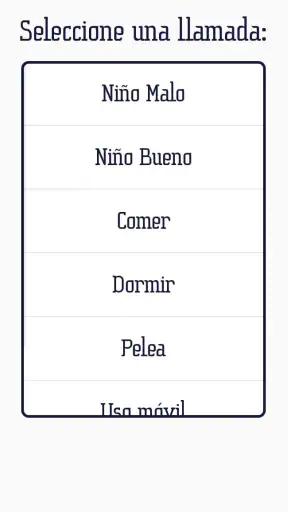
The practical flow begins with the parent opening the app privately rather than handing over the phone as a surprise prop. I would look through the available interaction first, understand what the child is likely to see or hear, and decide on one short message. The goal should be specific: finish brushing teeth, stop hitting, get dressed, or return to bed. A vague demand such as “behave” gives the child no useful path forward.
This preparation is one of the less obvious strengths of the concept. It encourages the parent to turn a general complaint into a concrete next action. Even if the child ignores the police theme, that clarity can improve the conversation. A parent who says, “The toys go in this box now, then we eat,” gives the child a manageable target instead of an open-ended reprimand.
I would avoid using the app while angry. A theatrical tool can amplify the parent’s mood, and a joke delivered with frustration may sound like a threat. Taking a few seconds to lower your voice and choose the desired outcome makes the handoff feel intentional rather than reactive.
The parent-to-child handoff
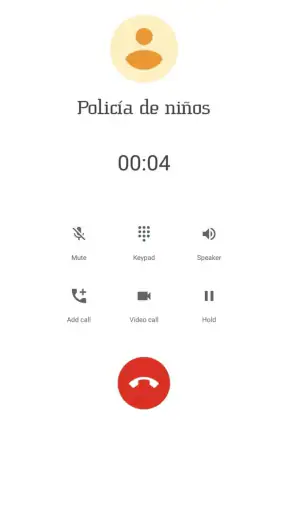
The handoff is the central part of the experience. The parent introduces the phone, the police idea, or the pretend authority, and the child decides whether to accept the game. That means the app cannot guarantee cooperation. It depends on timing, trust, and the relationship already present in the room.
In my view, the strongest handoff is transparent enough to preserve trust. You can frame it as pretend play: “Let’s see what the children’s police say about getting ready.” That wording keeps the parent responsible for the request instead of pretending that an invisible institution is controlling the household. It also gives the child a chance to participate rather than making the phone feel like a trap.
A useful workflow is to show the tool briefly, let the child respond, and then immediately connect the interaction to a doable action. If the child starts putting away the toys, praise the action rather than praising the app. The result you want is not fear of the police theme; it is a completed task and a clearer routine.
Another practical tip is to use the app sparingly. If it appears for every minor disagreement, its novelty will fade and the child may learn that ordinary instructions do not matter until the phone comes out. The app is most defensible as an occasional prompt during a stuck moment, not as the household’s permanent authority.
What happens after the child reacts
The outcome should be handled by the parent, not outsourced to the screen. If the child cooperates, acknowledge the specific behavior: “You put the blocks away when I asked.” If the child laughs, ask whether the task is still clear. If the child becomes upset, stop the performance and explain that the app was pretend. This follow-through is essential because a child needs to understand both the request and the emotional safety of the interaction.
For recurring problems, I would use the app as a signal to examine the routine rather than repeating the same performance. A child who resists bedtime every evening may need an earlier transition, fewer distractions, or a predictable sequence. A police-themed prompt might get one successful response, but it does not solve an overloaded schedule or an unclear expectation.
This is where the app compares differently with usual parenting alternatives. A sticker chart builds progress over time. A visual schedule makes the next step visible. A timer creates a neutral boundary. A calm consequence teaches what follows a choice. Policía de niños - para padres is more immediate and theatrical, but it is also less useful for tracking habits or explaining long-term responsibility. I would choose it for a brief reset, not for a complete behavior plan.
A realistic everyday scenario
Consider a parent preparing dinner while a child keeps leaving homework unfinished to play. The parent first gives a short instruction: finish the current exercise, then play. The child argues, and the parent feels the conversation becoming repetitive. Instead of raising their voice, the parent opens the app, presents the children’s police idea as pretend, and repeats the exact next step.
If the child smiles and returns to the table, the parent should close the interaction quickly and reinforce the effort. If the child asks whether the police will really come, the parent should answer honestly that it is a playful app and that the parent is still making the household rule. If the child looks worried, the parent should abandon the theme and reassure them. The same workflow can therefore produce three different outcomes, depending on the child’s response.
The important handoff is from novelty to responsibility. The phone may attract attention, but the child still needs to complete the homework without the screen hovering over every movement. If the parent keeps the app visible as a threat, the short-term compliance may come at the cost of independence. If the parent uses it once and then steps back, it has a better chance of remaining a light intervention.
Where the flow breaks
The flow breaks when the app is expected to solve a problem it was never designed to carry alone. It cannot replace a parent’s explanation, a consistent consequence, or professional support for serious behavioral concerns. It is also a poor fit for situations involving aggression, fear, trauma, or a child who already feels intensely anxious about authority. In those cases, adding a police theme may increase distress instead of improving cooperation.
Another point of friction is the phone itself. Unlocking a device, finding the right moment, and keeping the child focused can interrupt the routine you are trying to establish. A child may become more interested in the screen than in the instruction. Families trying to reduce device exposure may prefer a spoken cue, a printed routine, or a kitchen timer because those options do not introduce another digital object into the conflict.
There is also a trust trade-off. Pretending that a police figure is monitoring behavior may be funny in one family and manipulative in another. I would never use it to threaten arrest, shame a child in front of siblings, or create a false emergency. The safer approach is to keep the tone obviously playful, avoid public embarrassment, and stop immediately if the child does not enjoy the interaction.
Parents should also remember that an Everyone rating describes broad content suitability, not a guarantee that every child will like the theme. A preschooler and an older child may interpret the same police scenario very differently. Age, temperament, family language, and previous experiences with authority all matter more than the rating label when deciding whether to try it.
Who will get the most from it
I think the app is most suitable for parents who already communicate clearly and want an occasional playful prompt for minor resistance. It may help when a child enjoys role-play, responds to humor, and needs a small interruption to move from arguing to action. It can also give a parent a moment to reframe a repeated request without immediately escalating their voice.
It is less suitable for parents looking for detailed behavior tracking, shared family planning, educational explanations, or a structured reward system. Those needs are better served by a visual chart, a routine planner, or a consistent family agreement. I would also skip this app if the child is frightened by police imagery or if the parent feels tempted to use it as a threat.
The large audience around the app suggests that the concept has broad appeal: it has a 4.7 average from around ninety-six thousand ratings, with over ten million installs and about one thousand four hundred written reviews. Those figures show that many people are willing to try the idea, but they do not remove the need for judgment in an individual home. Popularity cannot tell you whether your child will find the approach amusing or unsettling.
Practical expectations before installing
The app is free, which makes experimenting with it relatively easy, especially for a parent who wants to see whether the style fits the family before committing money. I would still treat installation as the beginning of a small trial rather than a promise of better behavior. Try it during a low-stakes situation, watch the child’s reaction, and decide whether it improved cooperation without damaging trust.
Because it supports Android 5.0 and later, it can suit families using older compatible devices. The current version, 1.1.17, is worth checking on the device before relying on it in a rushed moment. My broader advice is simple: explore the interaction when everyone is calm, keep the phone in the parent’s hands, and prepare a non-digital alternative in case the child rejects the theme.
My overall experience and recommendation
My impression is that Policía de niños - para padres works best as a small piece of parenting theater, not as a discipline authority. Its value comes from interrupting a repetitive exchange and turning one instruction into a short, memorable scene. The parent’s judgment remains the real feature: choosing the right moment, making the request concrete, and handing control back to the child once the task begins.
The most important result is not getting obedience through fear; it is helping the child understand what to do next. If the app supports that goal with humor and the child enjoys the role-play, it can be a useful free addition to an occasional parenting toolkit. If it replaces calm boundaries, appears in every disagreement, or makes the child anxious, it is the wrong tool.
I would recommend trying it only with a clear limit and an exit plan. Use the children’s police idea for a minor, specific problem; observe the reaction; praise the real behavior; and return to ordinary communication. Families wanting a lasting routine should pair that approach with visual schedules, rewards, or consistent consequences instead. For parents who understand the trade-off, Kids police has created an accessible experiment in playful redirection—helpful in the right moment, but never a substitute for the parent-child relationship.


